Understanding a perfume material
Distinguish a plant, its extract and an odour molecule.
What you will learn
- Distinguish a plant, its extract and an odour molecule.
- Describe two facets without claiming to identify the whole formula.
- Explain what a material contributes to a fragrance.
More than a smell
A perfumery material is an odorous substance, natural or synthetic. Plants, resins, woods and citrus provide examples; historical animal materials are now often replaced. Its value also lies in what it contributes to the whole composition.
Four useful questions
Where does it come from? Which facets does it reveal? How quickly does it evolve? What role does it play? Separate origin, smell profile, volatility and function.
A landscape example
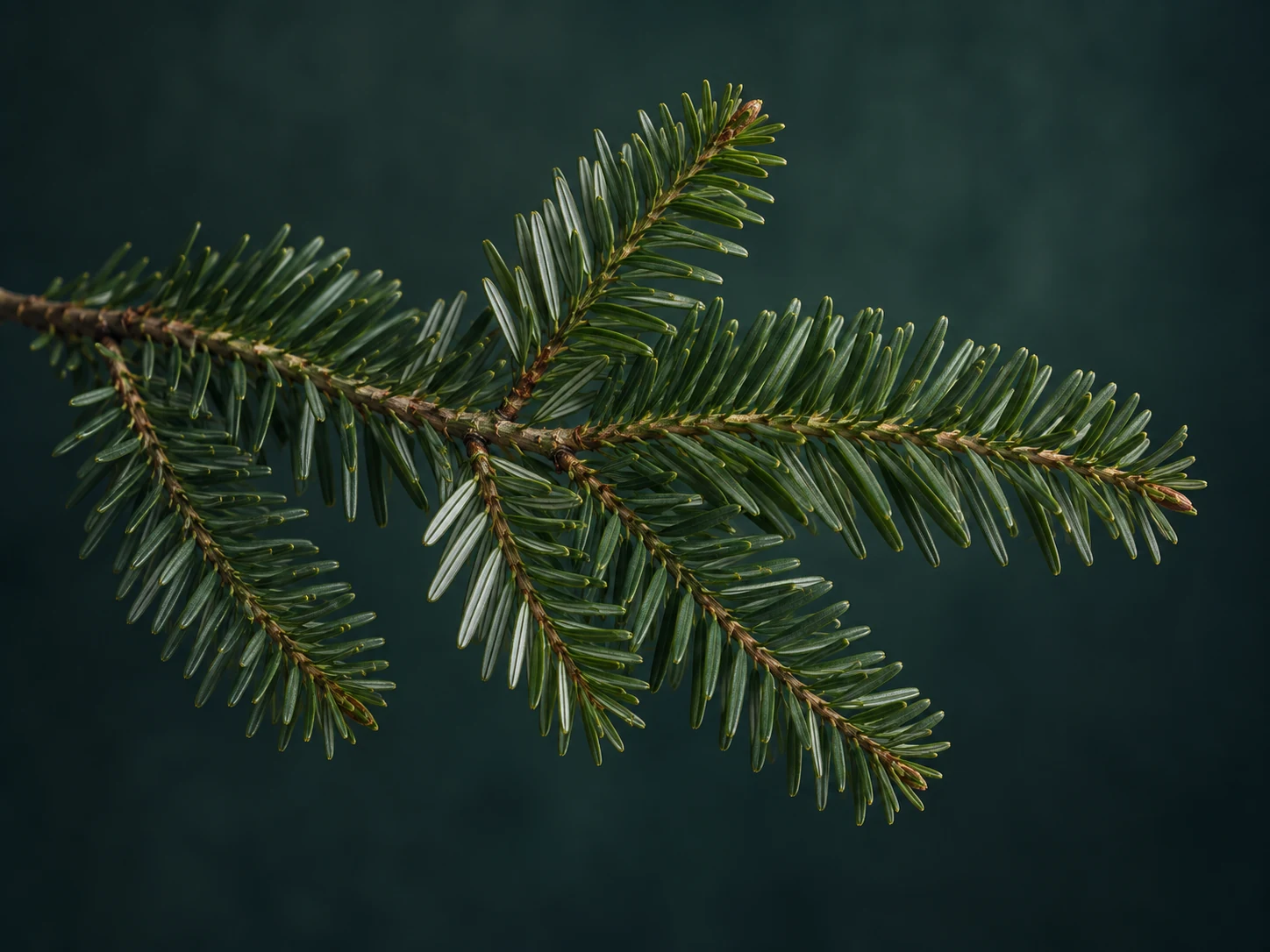
Imagine a path after rain: pine suggests resinous freshness, moss a darker dampness, dry wood a structure. These are descriptive impressions; their combination builds a landscape that no single material expresses alone.
Plant, extract, molecule: three different levels
Bergamot is a fruit. Its essence is a material obtained from its peel. An odour molecule is a defined constituent, found in nature or produced by synthesis. The name of a plant and the name of a perfumery material are therefore not always interchangeable.
A facet is one aspect of a smell
The same material can seem lemony, green and slightly floral. These impressions are its facets. The surrounding materials may bring one of them forward: describing these nuances is more useful than immediately searching for the “right” answer.
Natural and synthetic: understanding how they complement each other
A natural extract can contain many constituents. A defined molecule allows the perfumer to work on a precise effect. Origin alone does not determine the quality of the result: the balance of the combination and the material’s behaviour also matter.
Choosing the right words
Say “this note evokes fresh zest” when describing a sensation. Reserve “this fragrance contains bergamot essence” for information confirmed by the House. This distinction makes advice both engaging and accurate.
Useful words
Describing a sensation is not analysing a formula. Write “this reminds me of…” when offering a comparison.
Facet
One aspect of a smell: a single material may suggest lemon, green leaves and wood.
Accord
A blend of materials that creates an overall impression. It can evoke a plant without containing its extract.
Extract
A material obtained from a source through a specific process. The plant name alone is not enough: the part and method matter.
Distillation
Steam carries volatile constituents. After cooling, the watery distillate is separated from the essential oil when present.
Absolute
A fragrant extract obtained through extraction and purification, usually with solvents. It is not an essential oil.
Resin
A plant secretion distinct from needles and wood. Its extract and an essential oil distilled from foliage are not interchangeable.
Try it yourself
How to study this lesson
- Read the lesson and identify the words material, extract and accord.
- Observe a familiar smell without putting it on your skin.
- Write four lines: known source, facets, evolution and an imagined role.
Choose a familiar smell, such as citrus peel. Write down three precise impressions, then a simple comparison: lively like zest, green like a leaf, soft like the flesh of a fruit. Compare it with a fragrance on a blotter. Identify one similarity and one difference; do not conclude that the same material is in its formula.
Reveal the guidance
- Does a rose smell prove the presence of rose extract? No: an accord can evoke the flower.
- Can I describe a material using more than “nice” or “strong”?
- Have I separated what I know from what I imagine?
Remember
A material is not chosen only for its scent, but for its place and behaviour within the composition.