Alpine hay
Drying changes grass into a softer, drier and sometimes honeyed memory.
Read the lesson ↓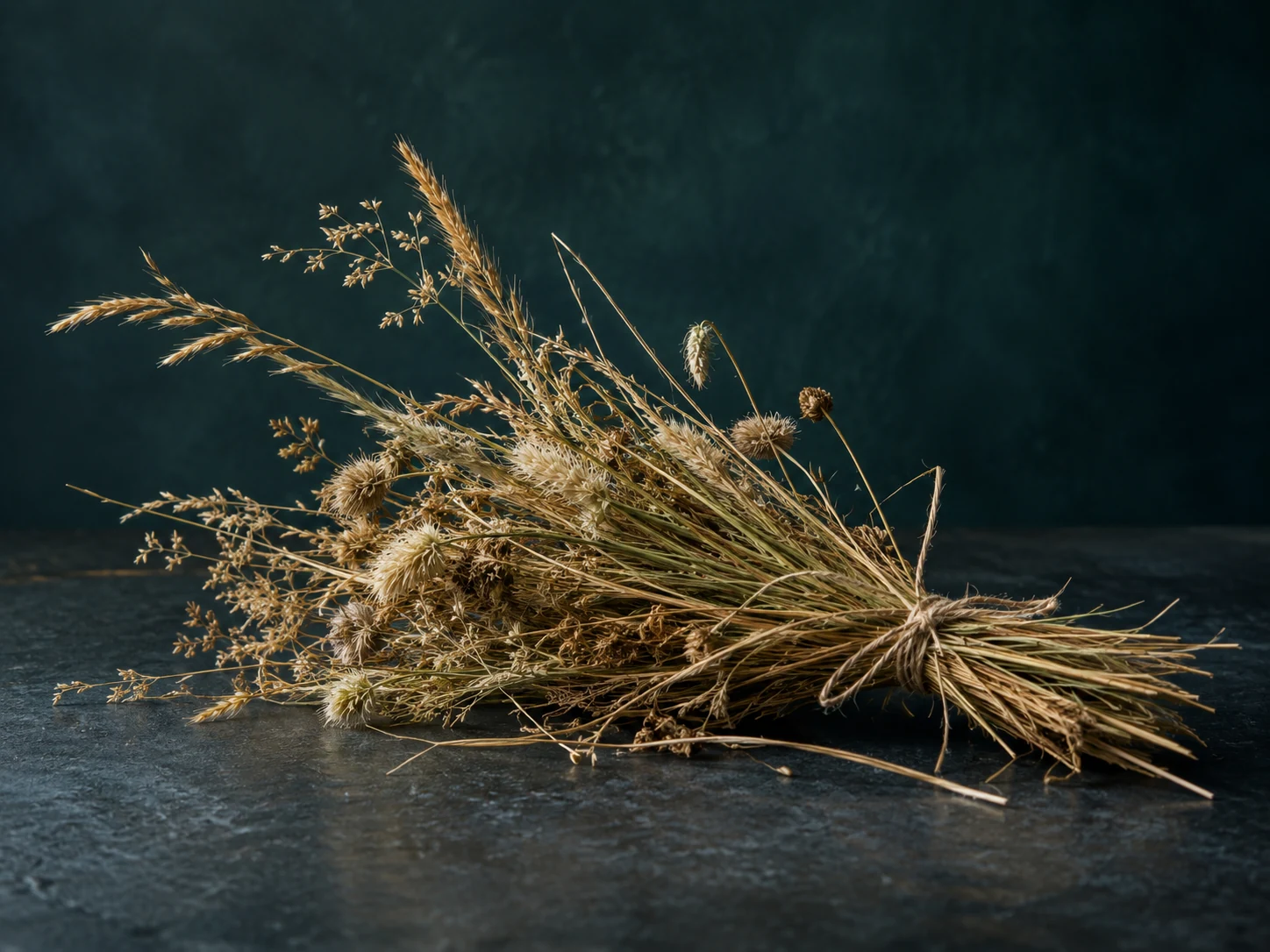
Recognising the subject
Hay is not one botanical species: it is a mixture of cut, dried plants. Its composition depends on the meadow. The Val d’Hérens frames this story without identifying the origin of a House ingredient.
Which season?
Haymaking depends on weather, meadow maturity and altitude. July is a reading theme. Clean, dry hay is different from fresh grass or damp material.
The dossier month is a reading appointment, not a harvesting date. Observe without collecting; altitude, weather and provenance change the seasons.
From plant to material
Hay absolutes exist in fragrance suppliers’ catalogues. An absolute involves extraction and purification, not a simple infusion or necessarily distillation. Check the starting plants and process on the supplier’s sheet; all hay products are not identical.
Extract · How to study this lesson
Look for four things on a supplier’s sheet: botanical name, plant part, process and batch origin. An essential oil, a maceration and an accord are different things. Distillation does not reproduce an entire landscape’s smell: it selects what steam can carry.
Useful words
Describing a sensation is not analysing a formula. Write “this reminds me of…” when offering a comparison.
Facet
One aspect of a smell: a single material may suggest lemon, green leaves and wood.
Accord
A blend of materials that creates an overall impression. It can evoke a plant without containing its extract.
Extract
A material obtained from a source through a specific process. The plant name alone is not enough: the part and method matter.
Distillation
Steam carries volatile constituents. After cooling, the watery distillate is separated from the essential oil when present.
Absolute
A fragrant extract obtained through extraction and purification, usually with solvents. It is not an essential oil.
Resin
A plant secretion distinct from needles and wood. Its extract and an essential oil distilled from foliage are not interchangeable.
A simple exercise
Compare a memory of dry hay with freshly cut lawn. Choose dry, sweet, herbaceous, honeyed or woody, then explain the difference.
Understanding the answer
A honeyed nuance does not mean honey is present. “Soft, dry hay” is more informative than “a countryside smell”.
These materials are learning subjects, not a list of ingredients in Maison du Lac creations.
My personal note
Sign in to keep my notes →Sources and further reading
Next Cahier
Extracting a plant’s scent
Read the lesson →