White genepi
Artemisia umbelliformisLearn to separate an aromatic smell, bitterness and a traditional use.
Read the lesson ↓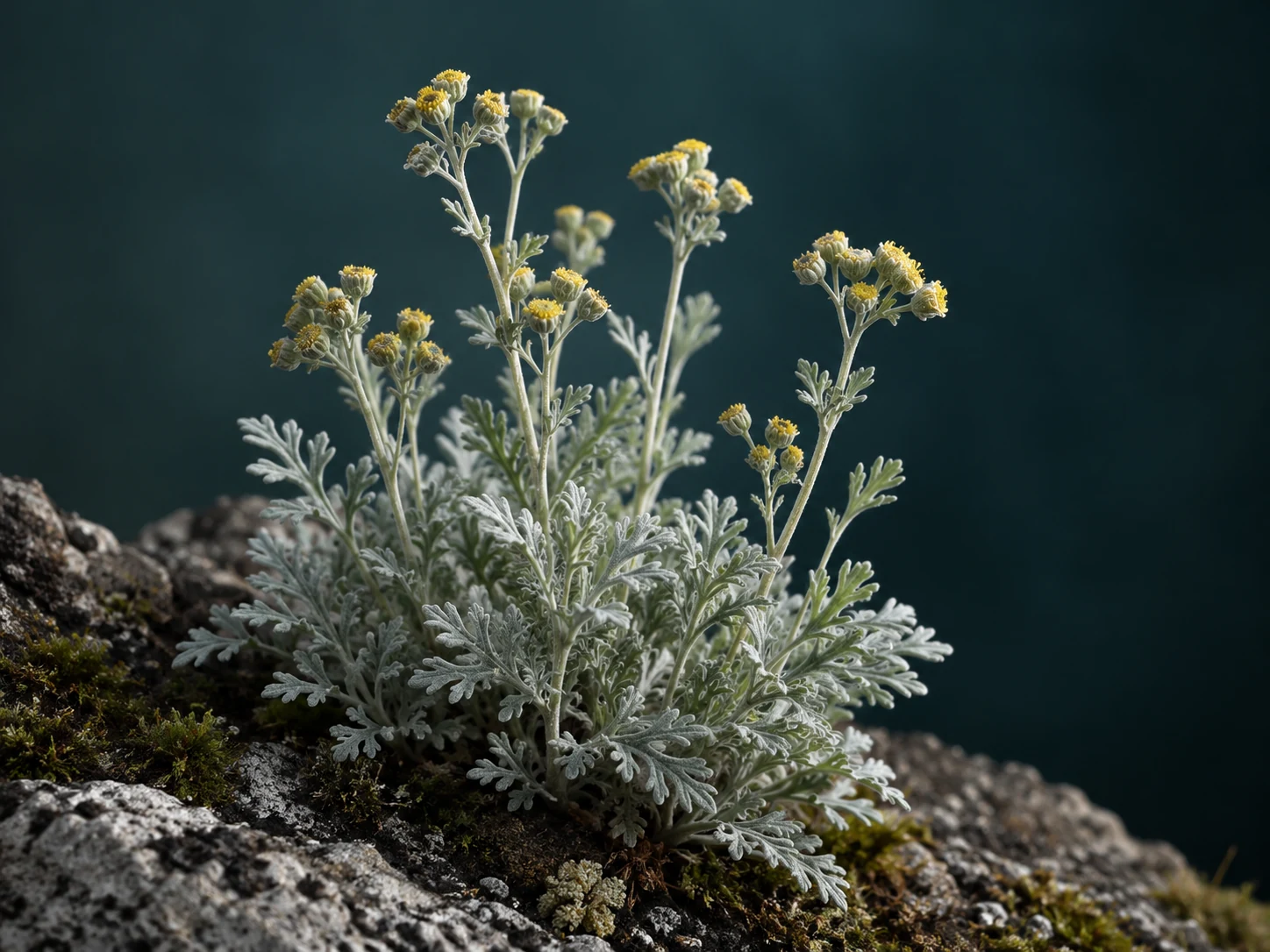
Recognising the subject
Artemisia umbelliformis is a small Alpine wormwood with silvery foliage and small yellow flower heads. Genepi can refer to several species, so identify which one is being discussed.
Which season?
High-altitude flowering occurs in summer, varying by site. August is a discovery theme, not a picking instruction. Cultivation and wild collecting are different supply routes. Observation is enough.
The dossier month is a reading appointment, not a harvesting date. Observe without collecting; altitude, weather and provenance change the seasons.
From plant to material
Maceration for genepi drinks does not by itself describe a perfumery extraction process. Solvent, intended use and specifications differ. This page claims no particular genepi process or ingredient in our creations.
Extract · How to study this lesson
Look for four things on a supplier’s sheet: botanical name, plant part, process and batch origin. An essential oil, a maceration and an accord are different things. Distillation does not reproduce an entire landscape’s smell: it selects what steam can carry.
Useful words
Describing a sensation is not analysing a formula. Write “this reminds me of…” when offering a comparison.
Facet
One aspect of a smell: a single material may suggest lemon, green leaves and wood.
Accord
A blend of materials that creates an overall impression. It can evoke a plant without containing its extract.
Extract
A material obtained from a source through a specific process. The plant name alone is not enough: the part and method matter.
Distillation
Steam carries volatile constituents. After cooling, the watery distillate is separated from the essential oil when present.
Absolute
A fragrant extract obtained through extraction and purification, usually with solvents. It is not an essential oil.
Resin
A plant secretion distinct from needles and wood. Its extract and an essential oil distilled from foliage are not interchangeable.
A simple exercise
Define aromatic as a smell and bitter primarily as a taste. Can a fragrance suggest bitterness without tasting a plant?
Understanding the answer
Yes, as a comparison or memory association. Make that distinction clear; fragrance is not for tasting.
These materials are learning subjects, not a list of ingredients in Maison du Lac creations.
My personal note
Sign in to keep my notes →Sources and further reading
Next Cahier
The main olfactory families
Read the lesson →