Common juniper
Juniperus communisA practical introduction to aromatic smells, between green and spicy impressions.
Read the lesson ↓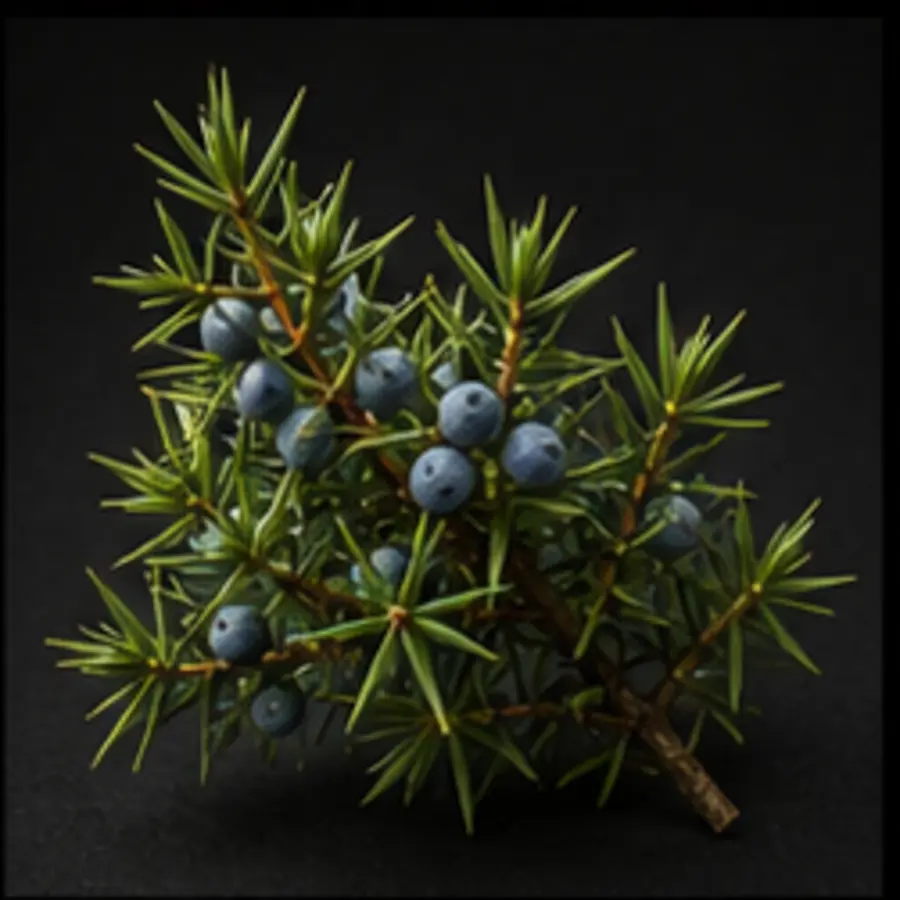
Recognising the subject
Juniperus communis is a conifer, often shrubby. What we call berries are fleshy-looking cones. Mountain landscapes invite observation, but a silhouette or photograph alone cannot identify a specimen.
Which season?
Cones at several stages may coexist. Harvesting for berry oil depends on the maturity required by the producer, not simply March. Use only an identified culinary spice for the exercise.
The dossier month is a reading appointment, not a harvesting date. Observe without collecting; altitude, weather and provenance change the seasons.
From plant to material
Ripe berries can be distilled into essential oil. Needle extracts are different products. Check whether a sheet says berries or needles. An aromatic impression can also be composed as an accord.
Extract · How to study this lesson
Look for four things on a supplier’s sheet: botanical name, plant part, process and batch origin. An essential oil, a maceration and an accord are different things. Distillation does not reproduce an entire landscape’s smell: it selects what steam can carry.
Useful words
Describing a sensation is not analysing a formula. Write “this reminds me of…” when offering a comparison.
Facet
One aspect of a smell: a single material may suggest lemon, green leaves and wood.
Accord
A blend of materials that creates an overall impression. It can evoke a plant without containing its extract.
Extract
A material obtained from a source through a specific process. The plant name alone is not enough: the part and method matter.
Distillation
Steam carries volatile constituents. After cooling, the watery distillate is separated from the essential oil when present.
Absolute
A fragrant extract obtained through extraction and purification, usually with solvents. It is not an essential oil.
Resin
A plant secretion distinct from needles and wood. Its extract and an essential oil distilled from foliage are not interchangeable.
A simple exercise
If you have identified culinary juniper, smell it at a distance in its jar. Choose two comparisons: green, spicy, woody or resinous, then add your own word.
Understanding the answer
Aromatic suggests fragrant herbs or plants. It is neither an indication of edibility nor proof of an ingredient in a fragrance.
These materials are learning subjects, not a list of ingredients in Maison du Lac creations.
My personal note
Sign in to keep my notes →Sources and further reading
Next Cahier
The main olfactory families
Read the lesson →