Conifer resins
After fir needles, explore a secretion that flows and hardens.
Read the lesson ↓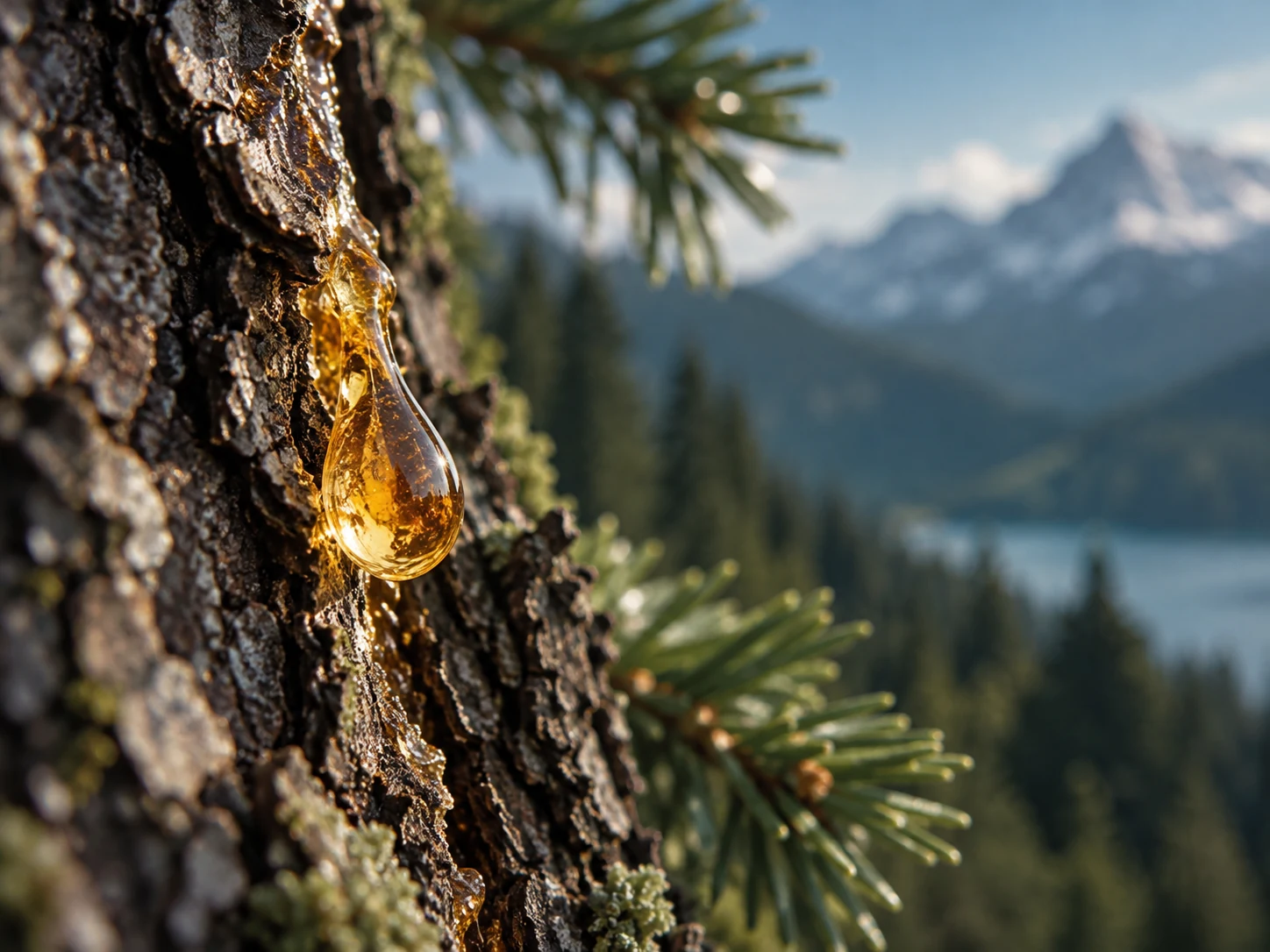
Recognising the subject
Resin is a plant secretion, not a species. Its composition depends on the tree and the material considered. The Vaud Alps are a setting, not a verified batch origin.
Which season?
Fresh drops and hardened resin look different as time and conditions change them. November is a reading appointment, not a tapping guide. Do not wound bark to cause a flow.
The dossier month is a reading appointment, not a harvesting date. Observe without collecting; altitude, weather and provenance change the seasons.
From plant to material
Oleoresin includes a volatile fraction and a resinous fraction. Producers use suitable separation or extraction methods for each material. Resin, essential oil and resinoid are not synonyms. A resinoid comes from extraction; foliage oil comes from another plant part.
Extract · How to study this lesson
Look for four things on a supplier’s sheet: botanical name, plant part, process and batch origin. An essential oil, a maceration and an accord are different things. Distillation does not reproduce an entire landscape’s smell: it selects what steam can carry.
Useful words
Describing a sensation is not analysing a formula. Write “this reminds me of…” when offering a comparison.
Facet
One aspect of a smell: a single material may suggest lemon, green leaves and wood.
Accord
A blend of materials that creates an overall impression. It can evoke a plant without containing its extract.
Extract
A material obtained from a source through a specific process. The plant name alone is not enough: the part and method matter.
Distillation
Steam carries volatile constituents. After cooling, the watery distillate is separated from the essential oil when present.
Absolute
A fragrant extract obtained through extraction and purification, usually with solvents. It is not an essential oil.
Resin
A plant secretion distinct from needles and wood. Its extract and an essential oil distilled from foliage are not interchangeable.
A simple exercise
Compare a fresh branch impression with a warmer, enveloping impression. Avoid claiming all resins are sweet.
Understanding the answer
Resinous and balsamic are descriptive clues, not guarantees of sweetness or lasting power. An extract’s source and process still matter.
These materials are learning subjects, not a list of ingredients in Maison du Lac creations.
My personal note
Sign in to keep my notes →Sources and further reading
Next Cahier
Top, heart and base notes
Read the lesson →